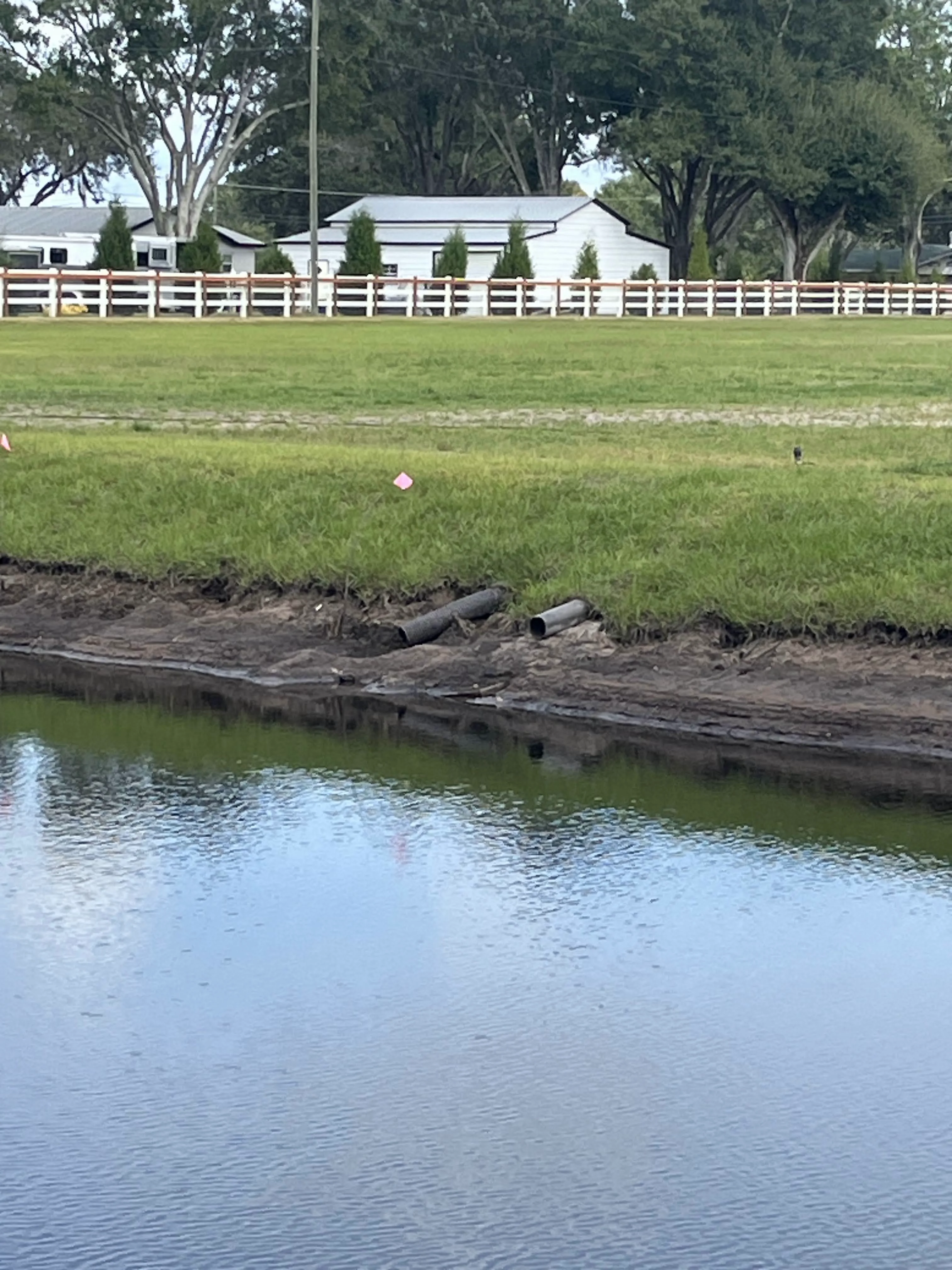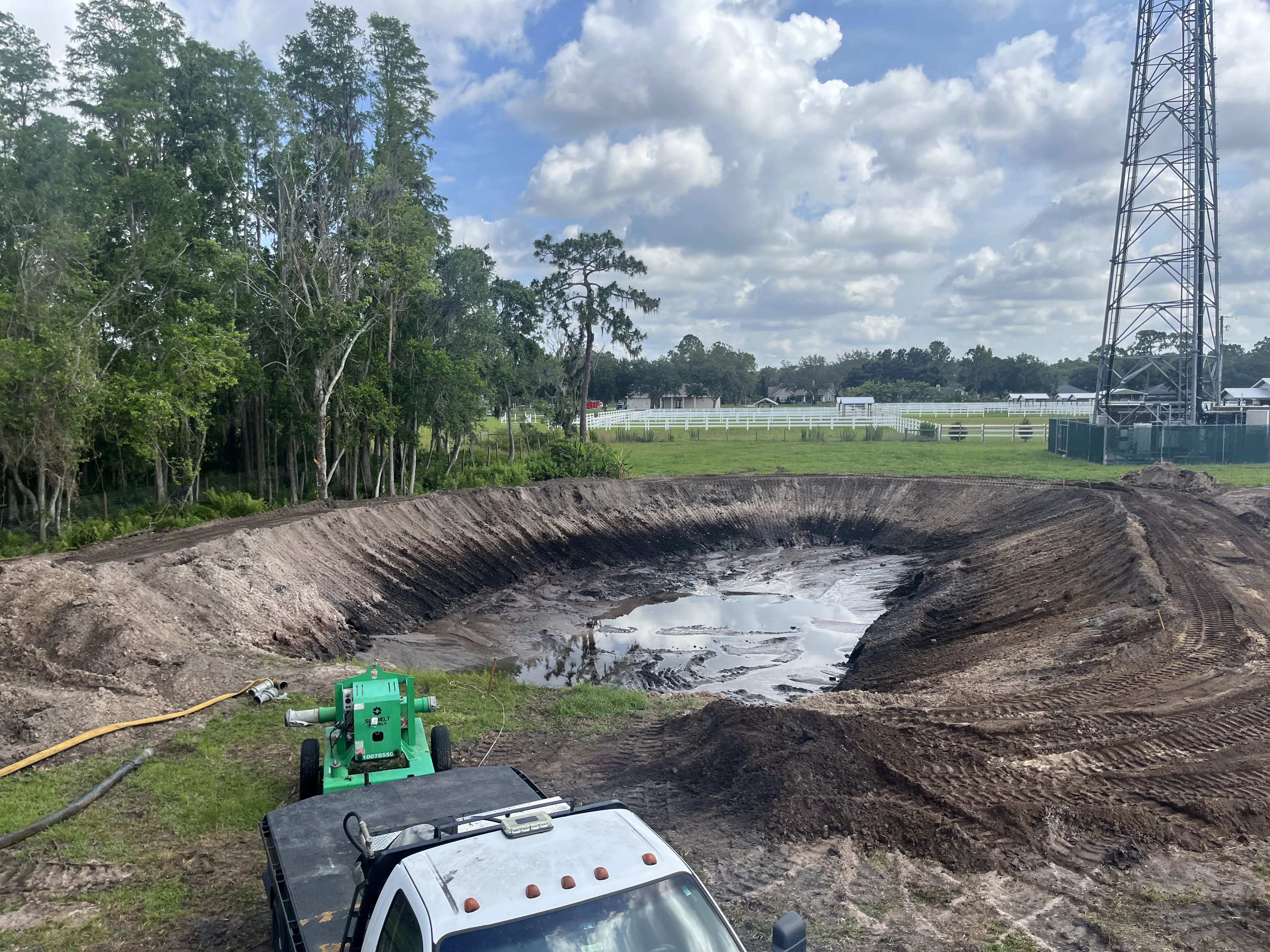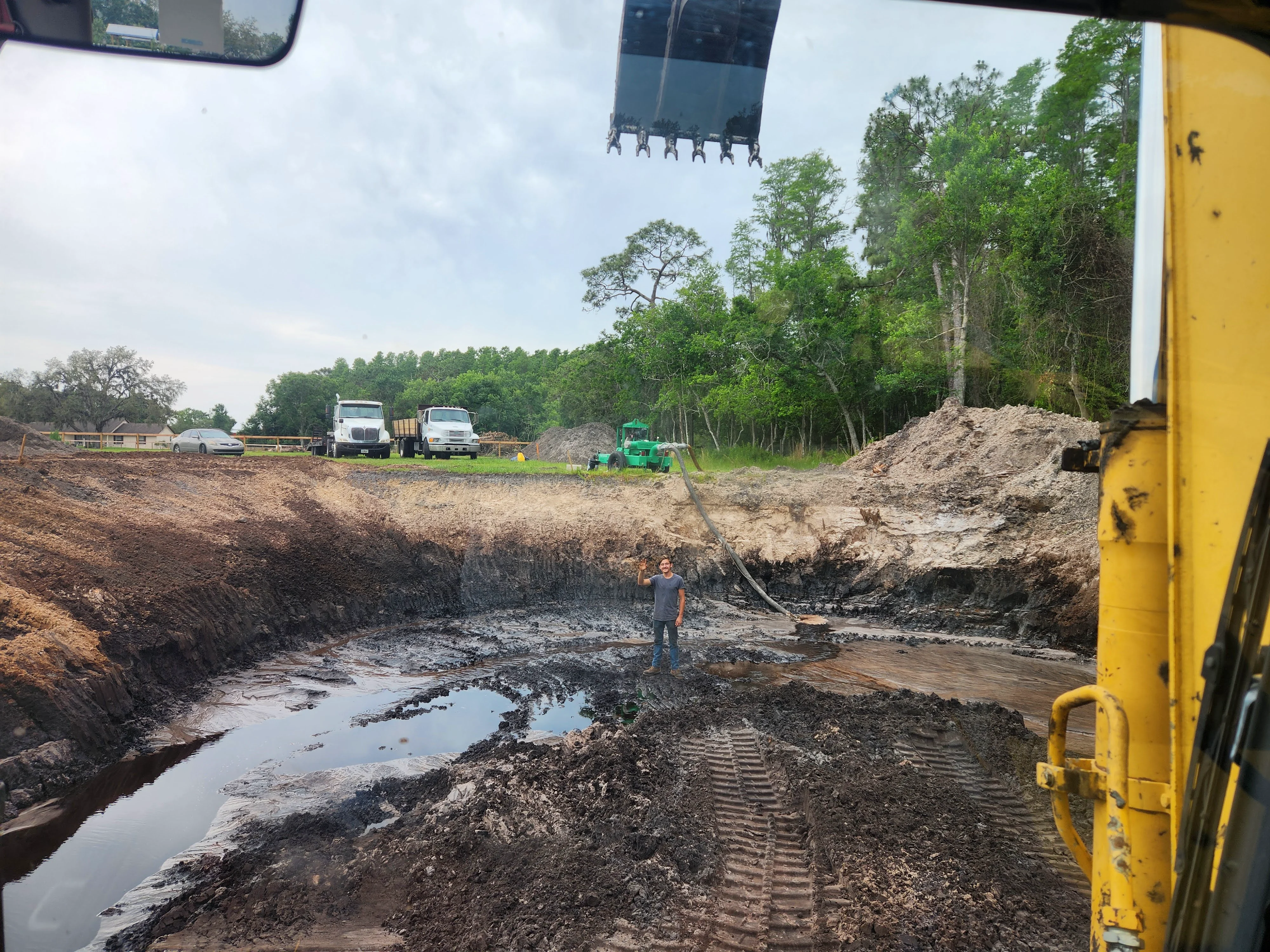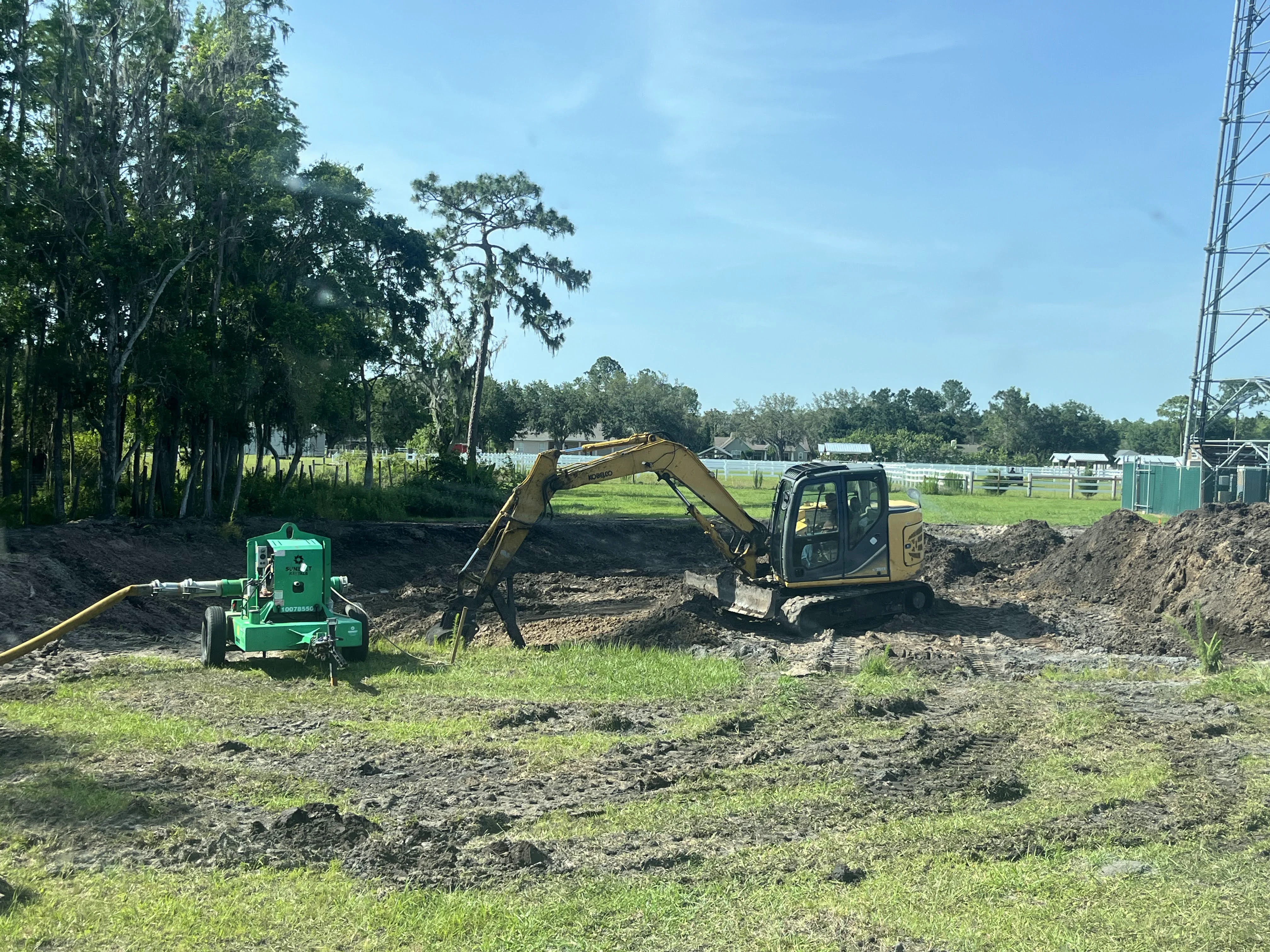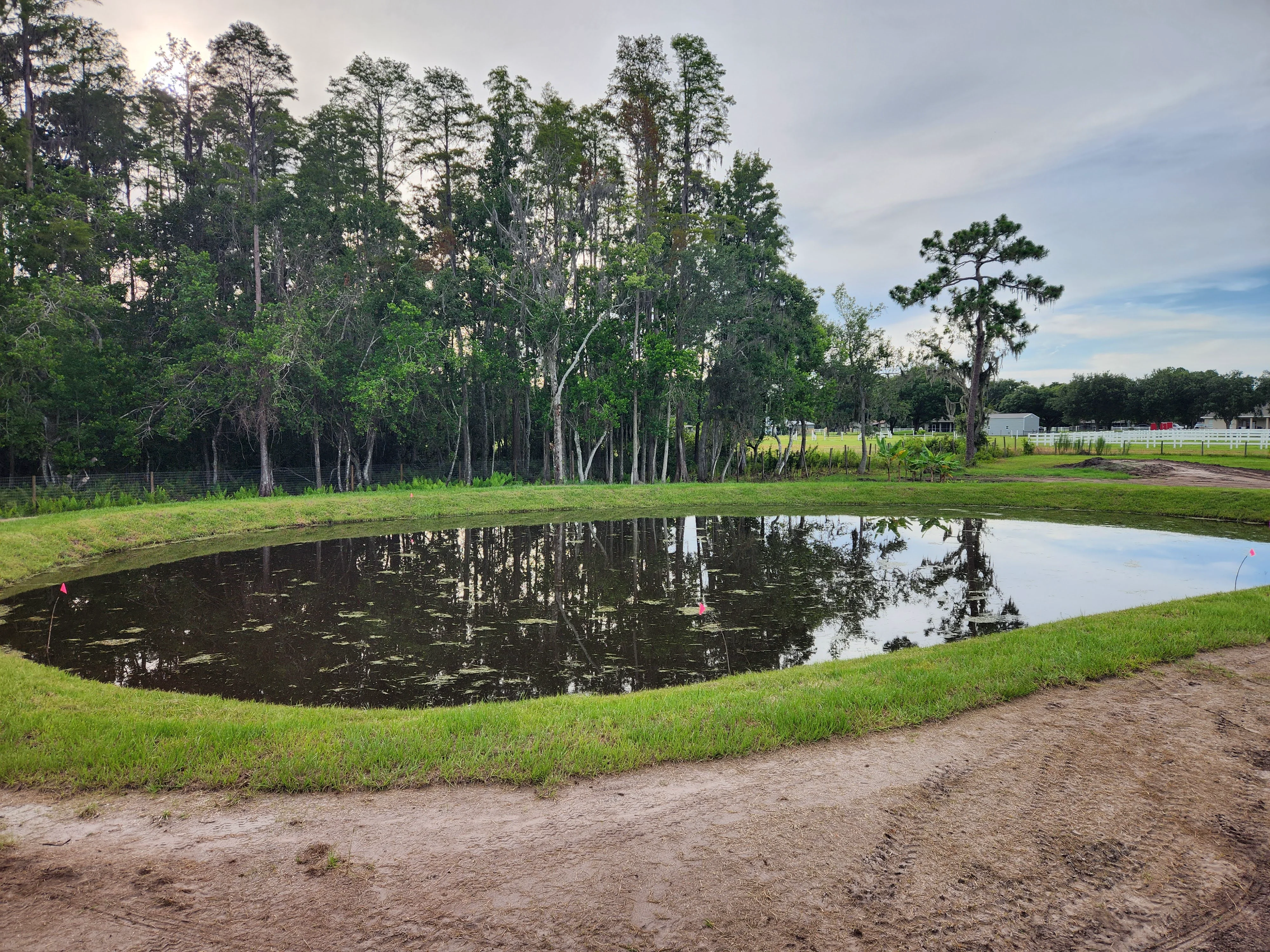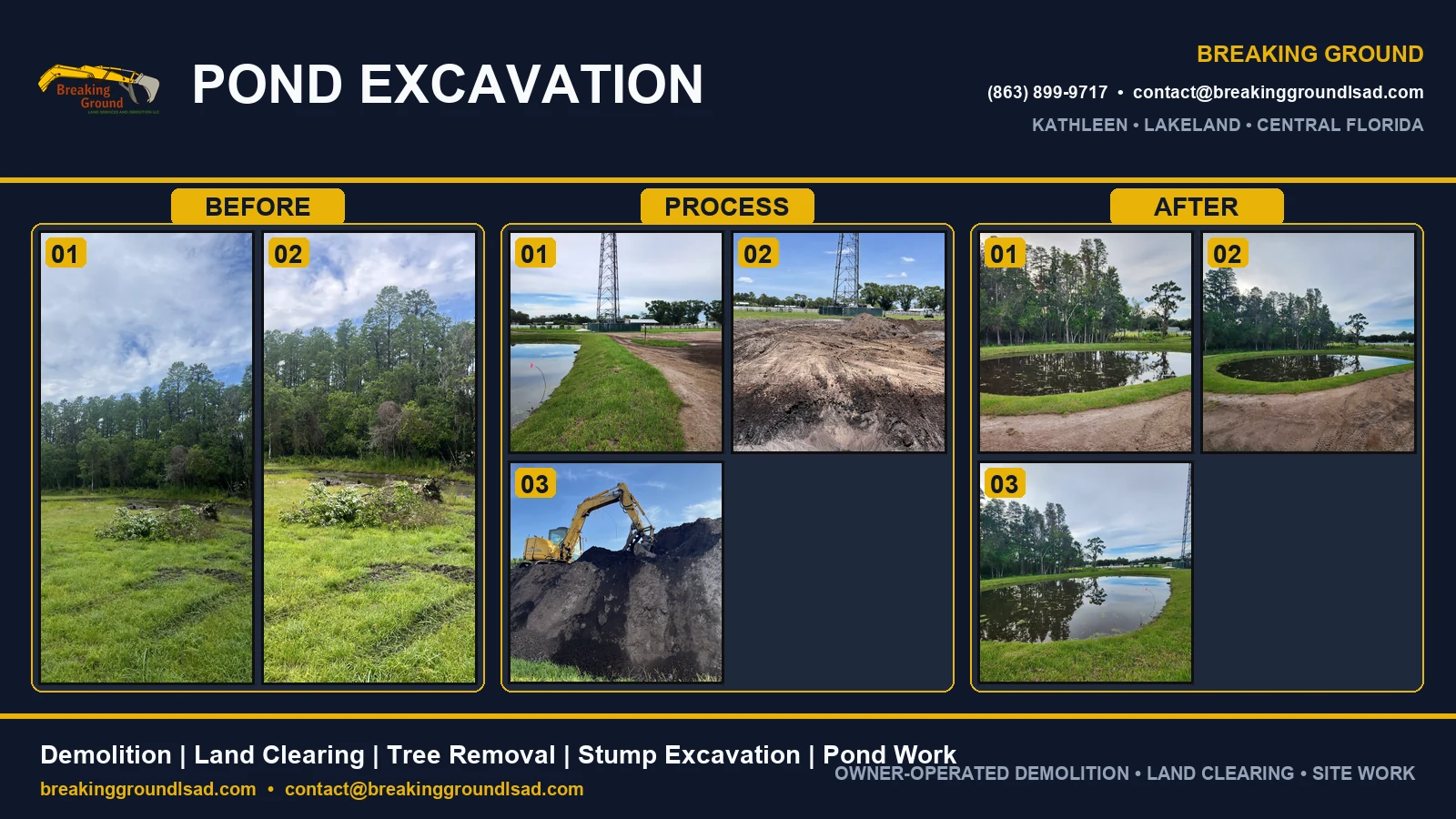
Homeowners searching how to dig a pond, build a farm pond, or start pond construction in Florida usually want the same outcome: usable water, controlled banks, and a site that will not wash out after the first heavy rain. On this pond excavation project, Breaking Ground Land Services and Demolition shaped an empty basin into a durable water feature with berm protection, drainage detailing, slope work, and an aerator install — the full sequence shown in the numbered before / process / after composite at the top of this page.
Google Trends interest across Florida over the past year shows that people search farm pond far more often than the contractor-facing phrase pond excavation. Seasonal spikes also appear for dig a pond and pond construction. That is why this page speaks in the language property owners actually type while still explaining the earthwork reality: spoil piles, slope geometry, berm height, drainage pipe, and algae control.
What the composite shows
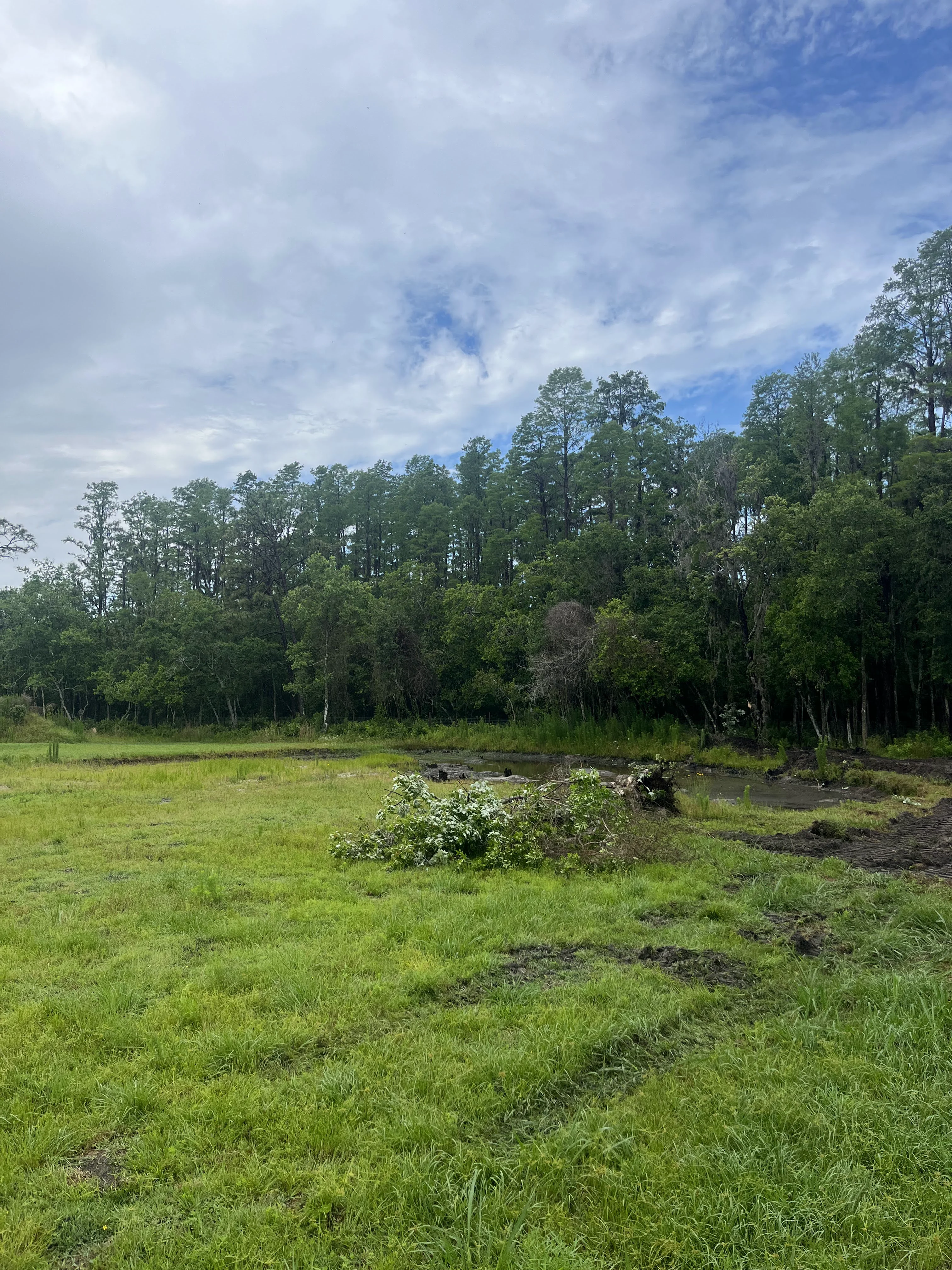
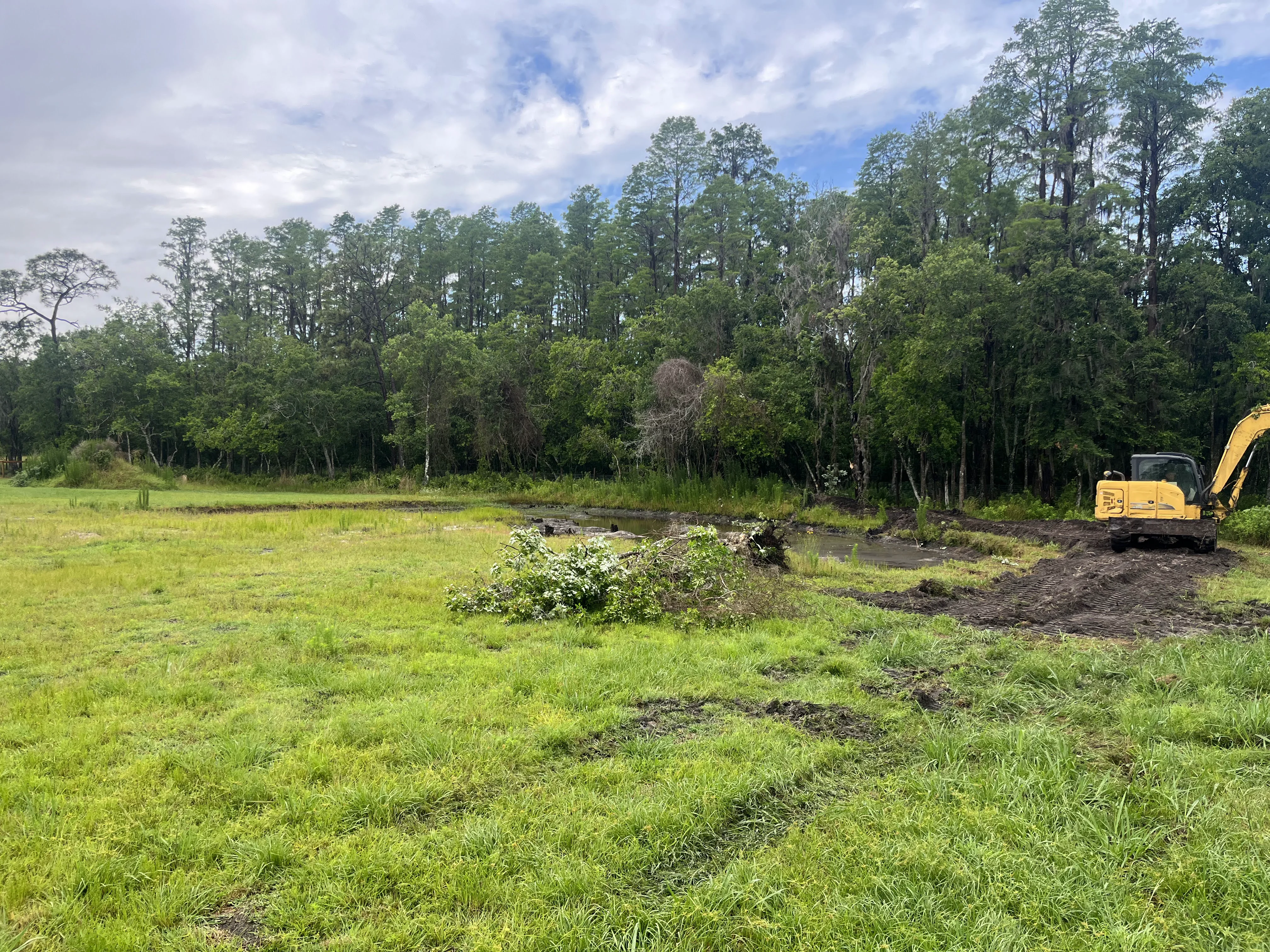
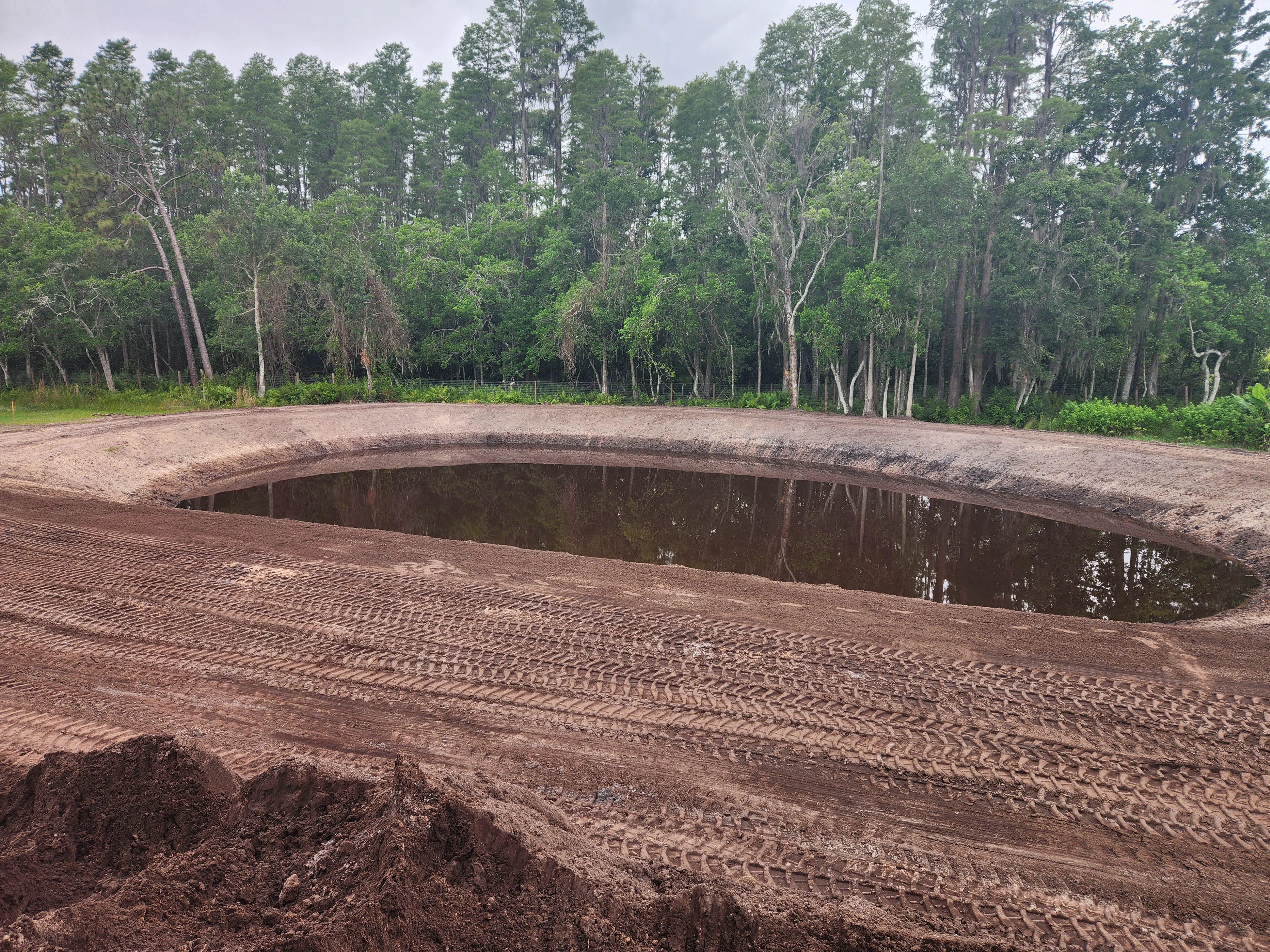
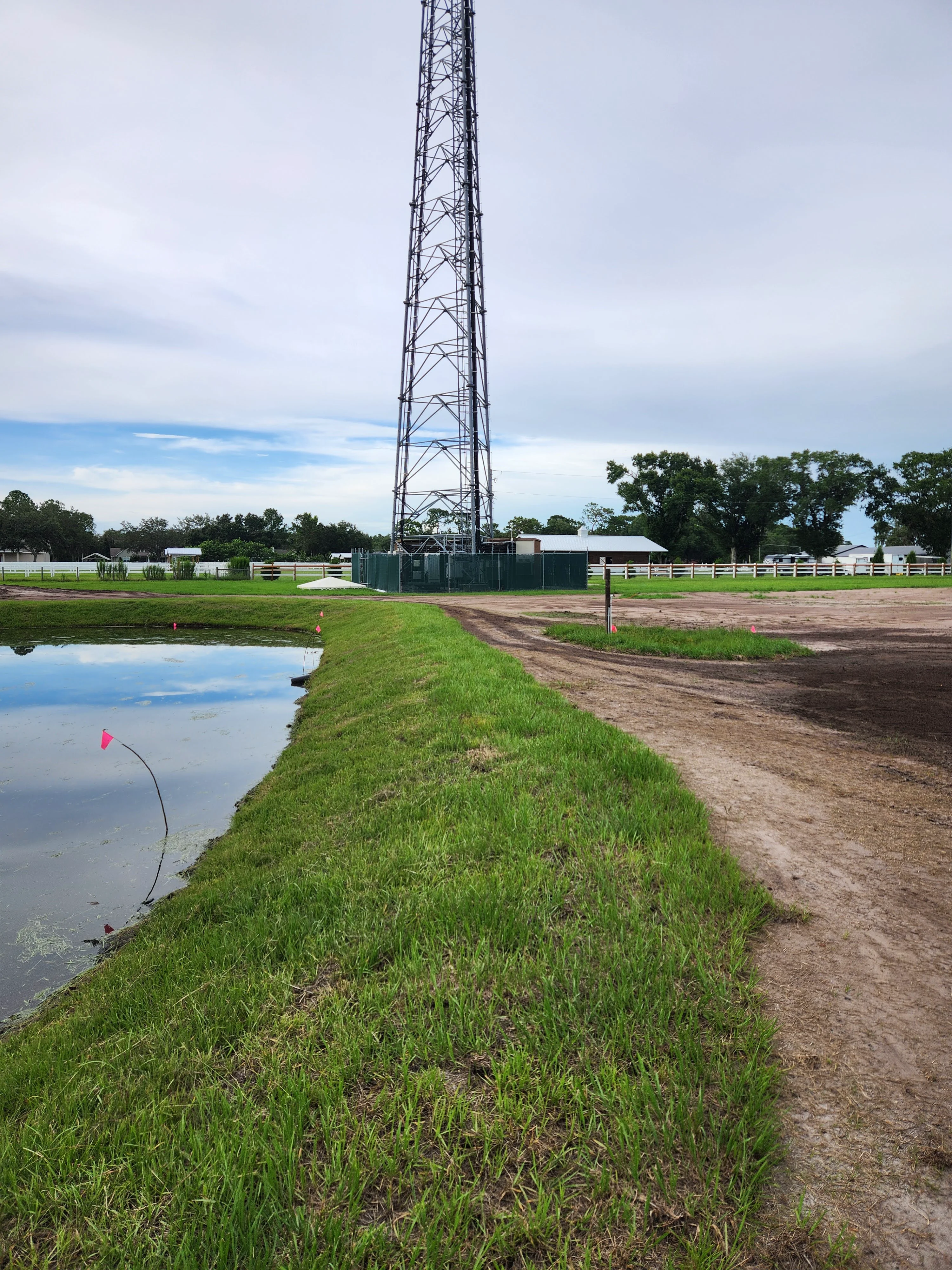
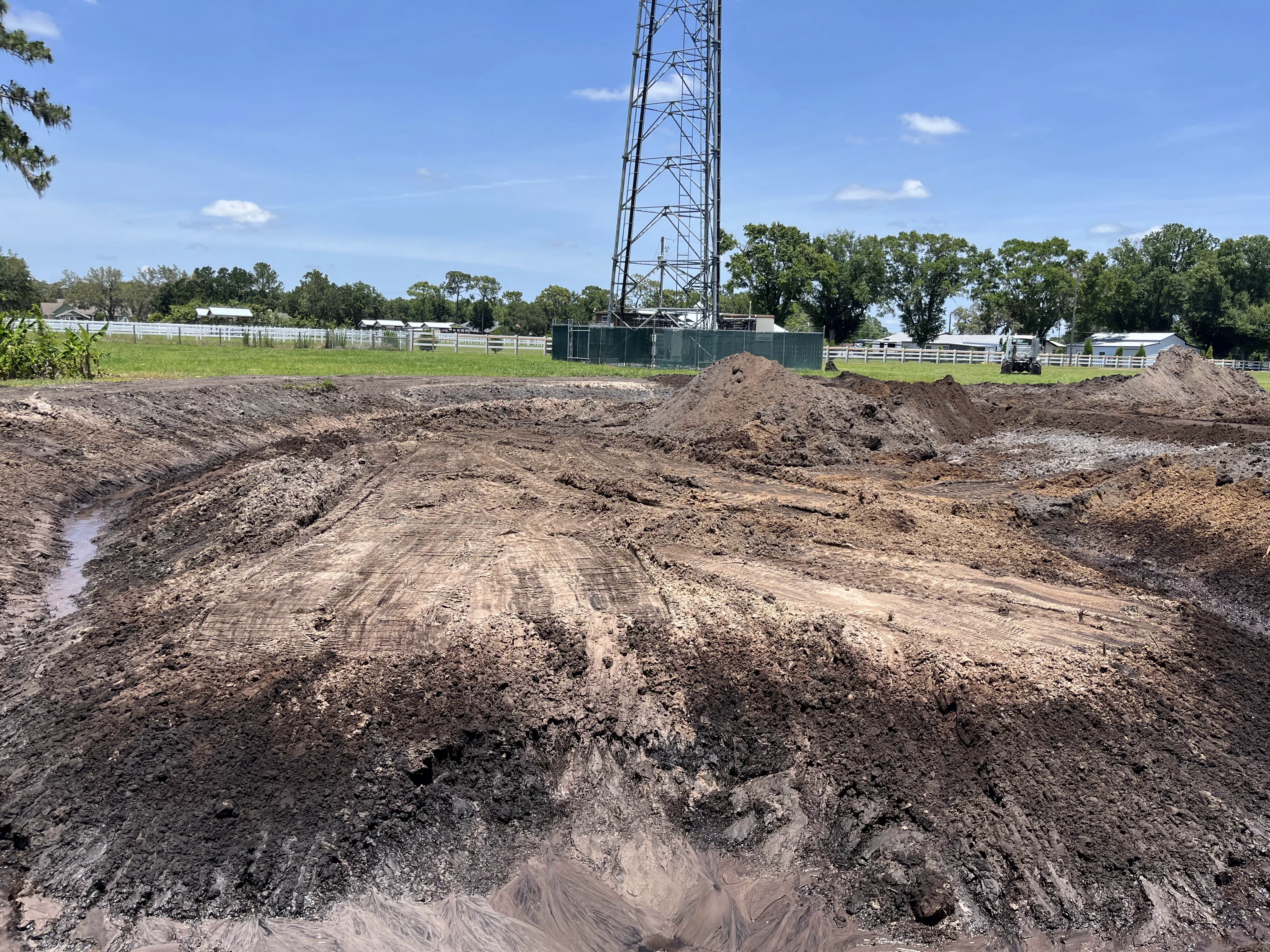
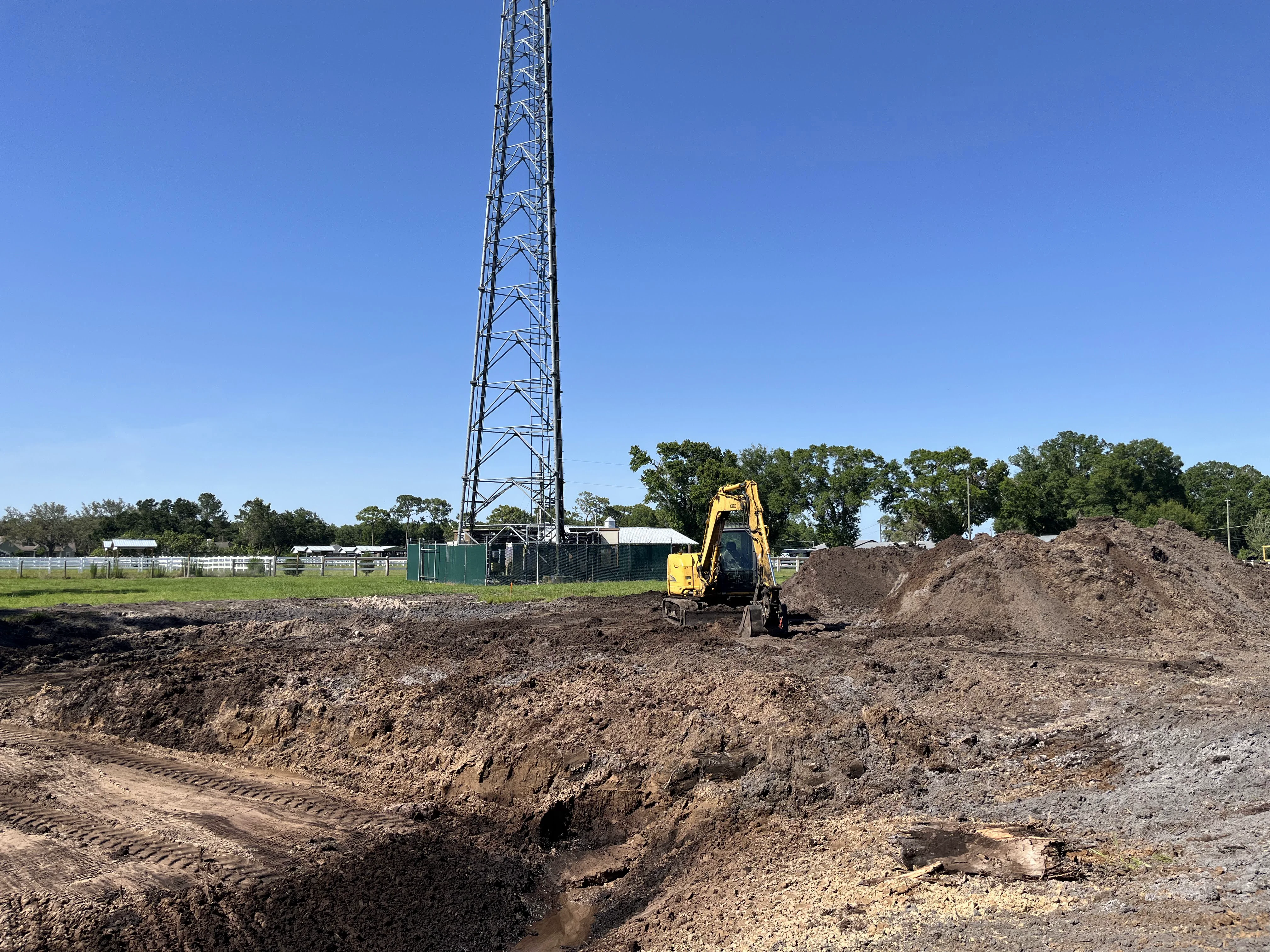
The branded composite is the fastest way to understand the job. Numbered frames in the Before column document the starting grade and empty basin. The Process column walks through defining the pond shape, pulling slopes, removing center spoil, staging dirt into a working pile, and placing pipe for drainage. The After column shows the finished water body, berm protection against washouts, and the aerator that helps limit algae. Each number matches captions in the gallery below so you can open any step and read what was happening on that frame.
Why Central Florida ponds fail without berms and drainage
Florida sand, sudden storm cells, and shallow groundwater create a different pond problem than northern clay soils. If you only dig a hole and walk away, banks can slough, runoff can cut channels, and algae can bloom in still warm water. A proper pond excavation plan in Polk County and nearby Central Florida markets usually needs:
- Defined pond geometry with intentional slopes instead of vertical cuts
- A berm or high side to interrupt sheet flow and prevent washouts
- Drainage or overflow planning so storm events do not destroy the banks
- Spoil management — where excavated dirt goes, how it is piled, and whether it becomes a landscape feature
- Water quality helpers such as circulation or an aerator when algae risk is high
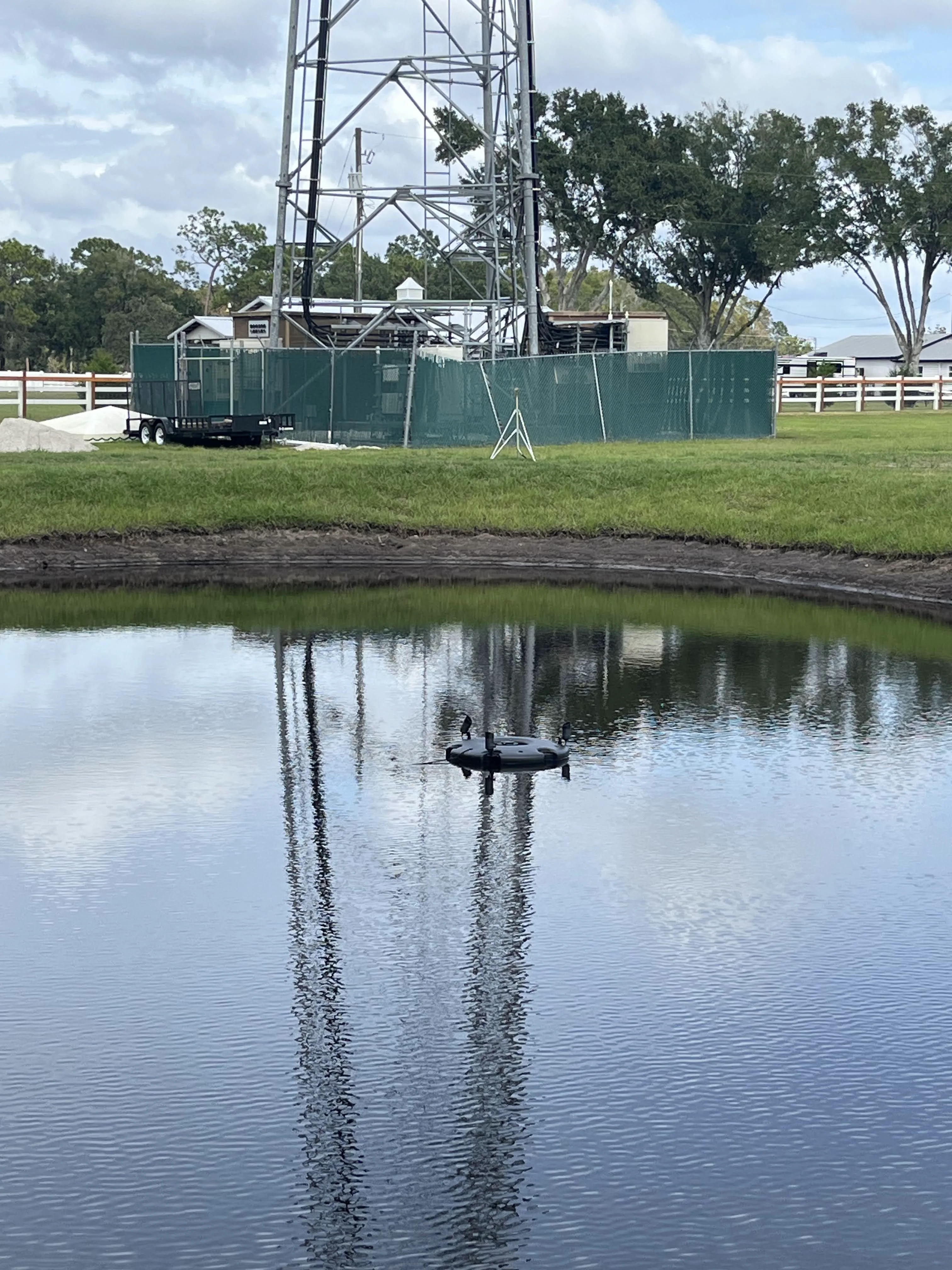
On this job, you can see those decisions in the process photos: shaping the basin, pulling slopes in multiple passes, installing pipe to allow drainage, building a berm to prevent washouts, and installing an aerator to reduce algae pressure once the pond began drawing groundwater and filling.
Farm pond vs ornamental pond vs drainage pond
Search demand for farm pond is high in Florida because rural and semi-rural owners want livestock water, irrigation buffering, wildlife habitat, or simply a reliable wet feature on acreage. Ornamental backyard ponds are different — usually smaller, lined, and landscaped. Stormwater or drainage ponds are different again and often tied to engineered requirements. This project sits in the practical owner-operated category: dig, shape, protect, and leave a pond that fills from the ground and stays usable without a resort-style hardscape package.
If you are comparing bids, ask every contractor how they handle berm height, slope angle, spoil placement, and overflow. Cheap digs that ignore those details become expensive repairs after the first tropical system. Breaking Ground’s father-and-son crew works the equipment themselves, so the person estimating the pond is also the person watching the slopes form in real time.
Equipment sequence that made this pond work
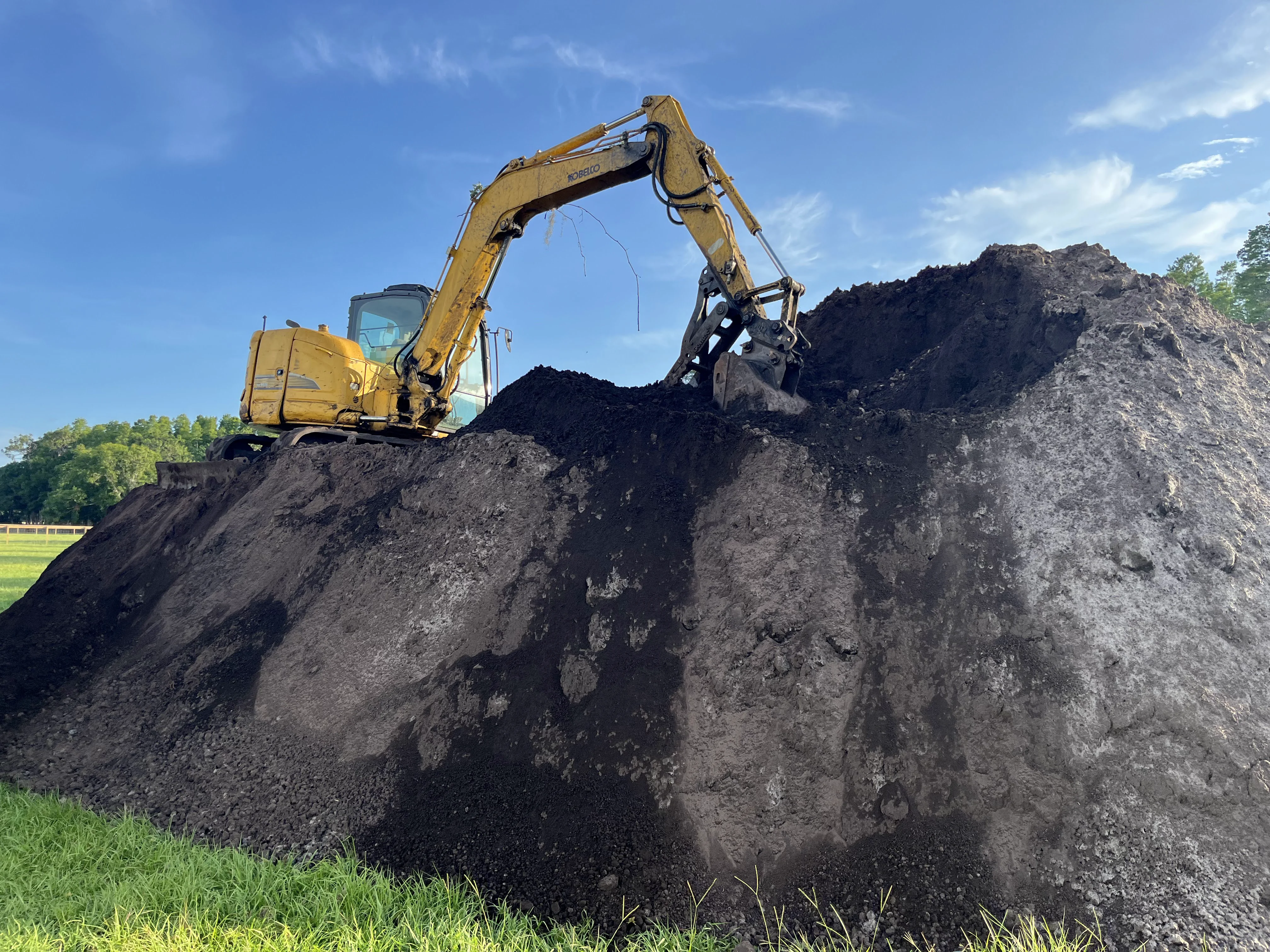
The gallery shows excavator work in the basin, spoil piled into a mountain for later berm and grading use, and hand/crew positioning to verify depths and edges. That mix matters. A pond is not only a digging contest — it is a sequencing problem. Remove center material too early without establishing banks and you lose reference. Build berms with soft spoil and they settle. Skip drainage detailing and concentrated flow cuts a trench overnight.
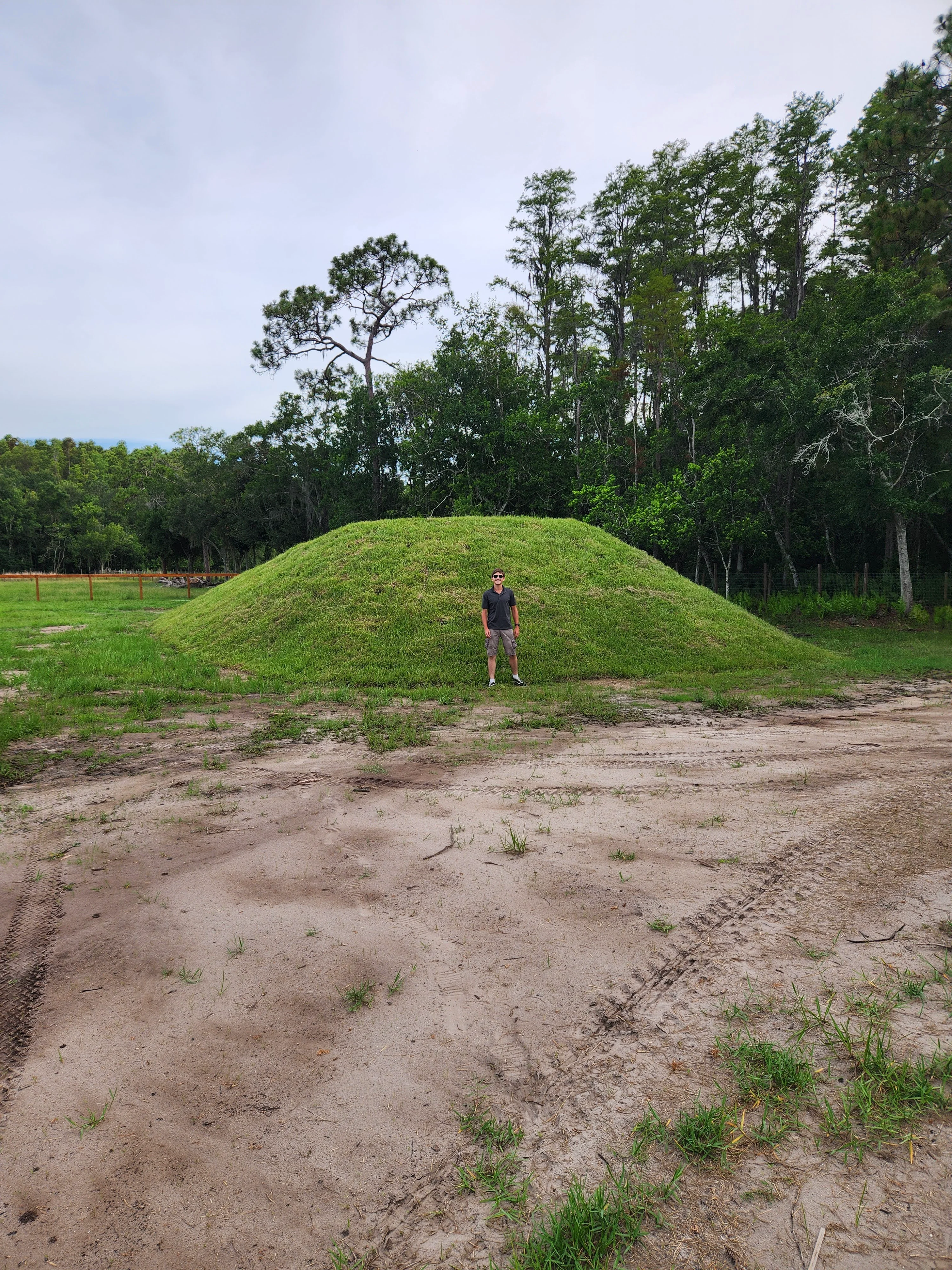
On this job, the customer also asked that part of the spoil mountain become a sodded hill for the kids to play on — so staged dirt was not just waste to haul; it became usable landscape. That is one more reason process photography is part of our marketing and our estimate conversations: photos make scope visible before you approve mobilization.
Property owners who only researched dig a pond videos often underestimate haul and spoil. Dirt has to go somewhere. On this site, spoil became part of the berm, grading, and play-hill strategy instead of an abandoned pile that blocks access later.
Algae, aeration, and Florida heat
Warm shallow water plus nutrients equals algae risk. An aerator will not replace good circulation design forever, but it is a practical step many Central Florida pond owners request after the basin fills. The captioned frame for aerator install is intentionally included so prospects searching pond construction and farm pond maintenance topics can see that finishing details are part of a complete job — not an afterthought upsell with no context.
Permits, wetlands, and when to pause
Not every dig is a free-for-all. Wetlands, surface-water connections, and local rules can change scope. Breaking Ground evaluates access, nearby structures, and water interaction before promising a timeline. If your pond idea touches regulated features, we say so early. Honest scoping protects both sides and keeps project photos honest: what you see here is real earthwork, not a staged render.
Who this project is for
This page is written for Florida owners comparing pond excavation, pond construction, and DIY dig a pond ideas who want a contractor that documents before, process, and after. It is also for people who already know they want a farm pond and need a crew with excavators, dump capacity, and berm experience rather than a landscaping-only team.
Based in Kathleen and serving Lakeland and Central Florida — with larger scopes considered statewide — Breaking Ground can review your lot photos by text, talk through depth and bank goals, and tell you whether berm and drainage detailing belong in the first mobilization.
Request a similar pond estimate
Send gate width, overhead lines, desired depth, and where spoil can be placed. The composite and gallery on this page are the proof style you should expect on your own job: numbered process frames, clear captions, and a finished pond that holds up past the first storm. Call or text (863) 899-9717 or use the contact form for a free estimate.
More process photos